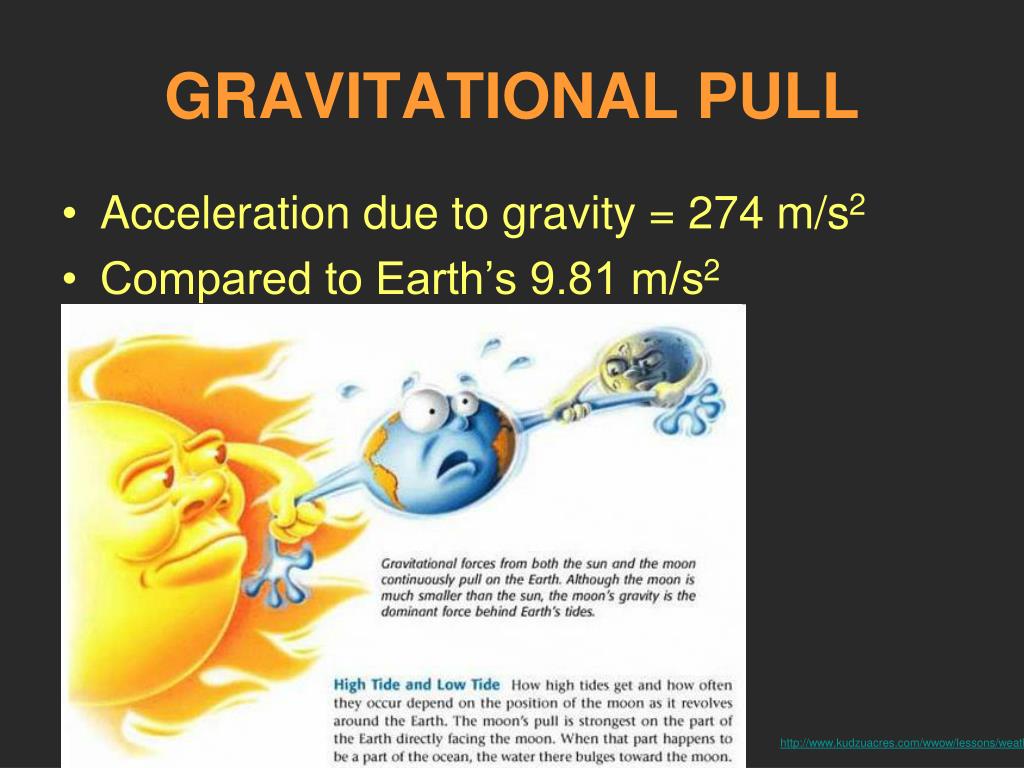
You know, I was staring out my window the other day, watching a squirrel absolutely bolt up a massive oak tree. It was like it had tiny little rockets strapped to its paws. And I thought, "Man, that little guy is defying gravity, right?" Well, not really defying it, is he? He's working against it, sure, but that pull, that invisible force… it’s always there. It’s the reason my coffee cup doesn’t just float off the desk, and the reason I don’t somersault off my chair every time I lean back too far. We take it for granted, this constant, gentle (or not-so-gentle, depending on your altitude!) tug. But have you ever stopped to wonder how we actually know how strong that pull is? I mean, we can't see it, we can't touch it, yet we can measure it. How, exactly?
It’s a question that’s probably popped into your head at least once, maybe while watching something fall or, like me, observing a particularly determined squirrel. It’s the kind of thing that makes you go, "Hmm, that's a bit of a puzzler." And trust me, it was a puzzler for centuries. For the longest time, we just… felt it. We knew things fell. We knew apples dropped from trees (thanks, Newton!). But pinning down a precise number? That took some serious brainpower and some rather ingenious, and sometimes downright quirky, experiments.
So, let's dive into the fascinating, and surprisingly down-to-earth, world of measuring the gravitational pull. No spaceships required, at least not for the fundamental stuff. We're talking about the gravity that keeps your feet firmly planted on planet Earth. You know, the stuff that makes dropping a feather and a hammer in a vacuum end up at the same time. Cool, right?
The Big Daddy of Gravity: Newton and His Apple (Sort Of)
We can't talk about measuring gravity without talking about the guy who pretty much wrote the book on it: Sir Isaac Newton. Legend has it, and you probably heard this in school, that an apple fell on his head, and bam! he figured out universal gravitation. Now, the apple-to-the-head part might be a bit of dramatization (he himself said he was sitting in a contemplative mood when he observed an apple falling), but the observation itself was crucial. He realized that the same force that pulled that apple to the ground was also keeping the Moon in orbit around the Earth.
This was a monumental leap. Before Newton, gravity was just this local phenomenon – things fall down. He proposed that gravity was a universal force, acting between any two objects with mass. And not only that, but he also came up with a mathematical formula to describe it: the Law of Universal Gravitation. You might remember seeing something like this:
$$F = G \frac{m_1 m_2}{r^2}$$
Where:

- $F$ is the force of gravity
- $G$ is the gravitational constant (the big mystery we’re trying to solve!)
- $m_1$ and $m_2$ are the masses of the two objects
- $r$ is the distance between their centers
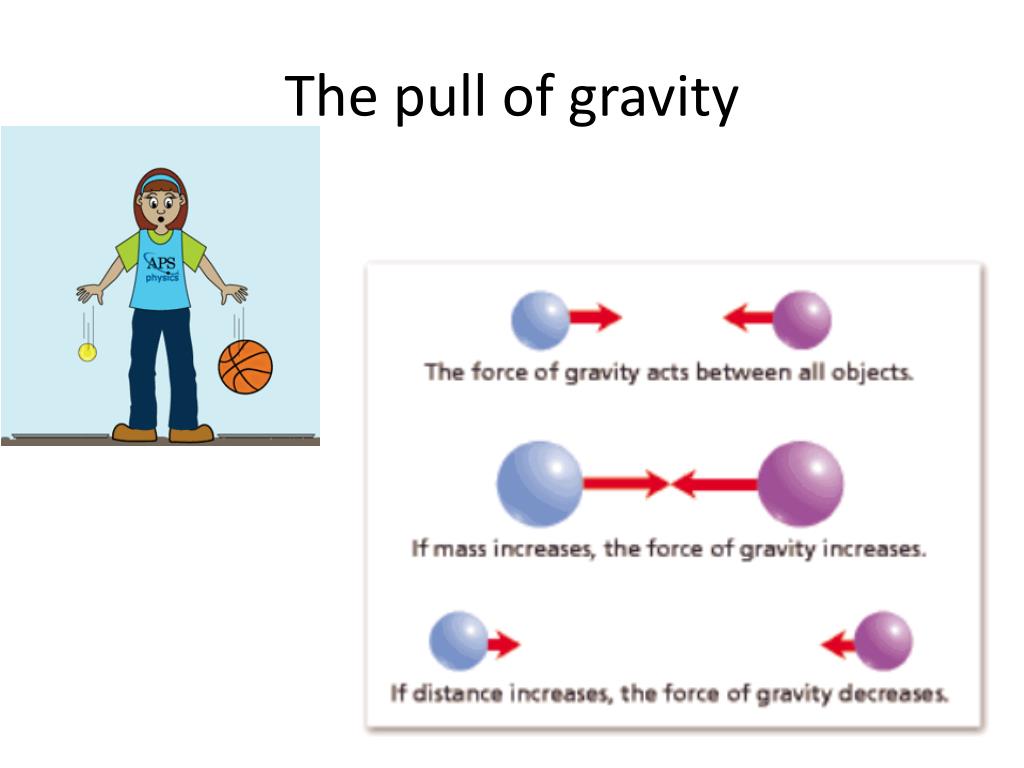
This formula is, like, the bedrock of our understanding. It tells us that the more massive objects are, the stronger the gravitational pull. Makes sense, right? A planet pulls on you harder than a pebble. And the farther apart they are, the weaker the pull. Again, intuitive. But the kicker is that $G$, that gravitational constant. Newton could describe gravity with this formula, but he couldn't actually measure the value of $G$. He knew how gravity worked, but not its precise strength.
Think about it: Newton’s genius was in seeing the connection and formulating the law. But to get a numerical value for the strength of this fundamental force? That was a whole different kettle of fish. It’s like knowing you need flour, eggs, and sugar to bake a cake, but not knowing the exact quantities. You can describe the ingredients, but you can’t bake the cake yet.
The First Real "Weigh-In": Cavendish and the Torsional Balance
Fast forward to the late 18th century. The scientific world was buzzing with Newton's ideas, but that elusive $G$ was still out there, taunting them. Enter Henry Cavendish, a rather eccentric and famously shy British scientist. He was determined to be the one to crack it. And how did he do it? By building what is now known as the Cavendish experiment.
Imagine a laboratory. It’s probably a bit dusty, filled with strange contraptions. Cavendish, not a fan of being around people, would have likely been working alone or with very few trusted assistants. He set up this incredibly sensitive apparatus: a torsional balance. Picture a thin, horizontal rod suspended from a fine wire. On each end of the rod, he attached small, lead balls.
Now, here’s the clever bit. He brought two much larger lead spheres near these suspended balls. The idea was that the gravitational attraction between the large spheres and the small balls would cause the rod to twist very, very slightly. The tiny force of gravity between these lead balls was so weak that it would be almost imperceptible. It’s like trying to hear a whisper in a hurricane.

To detect this minuscule twist, Cavendish used a mirror attached to the suspension wire. A beam of light reflected off the mirror onto a distant scale. Any tiny twist of the wire would cause the light spot to move a noticeable distance on the scale. He’d measure the angle of this twist, knowing the masses of the spheres and the distance between them. From this, he could calculate the force of gravity between them.
And here’s the kicker: by plugging this measured force, along with the known masses and distance, into Newton's Law of Universal Gravitation, he could finally solve for $G$. He was, in effect, the first person to "weigh the Earth". Because once you know $G$, you can figure out the Earth's mass based on the gravitational force it exerts on an object of known mass at its surface (which we can measure fairly easily using a spring scale, for example).
It's a bit like this: you know the recipe for a cake (Newton's Law). You can measure how much the cake weighs when it's finished (the force of gravity). You know the weight of your ingredients (the masses). But to know the exact "richness" or "density" factor of the flour, the eggs, etc. (that's $G$), you need to do a specific, delicate measurement. Cavendish did that delicate measurement, and it was a huge deal. It finally gave us a number for the strength of this fundamental force.
It’s All About That (Gravitational) Constant
So, why is this $G$ so important? Well, it’s fundamental. It's a number that describes the inherent strength of gravity in our universe. It's not a property of the Earth or the Moon or you; it's a property of gravity itself. And it's incredibly small! The value of $G$ is approximately 6.674 × 10⁻¹¹ N⋅m2/kg2. That little negative exponent? That tells you just how weak gravity is on the scale of everyday objects. It's why you don't feel your cat pulling you towards it, even though it has mass.
This tiny number, $G$, is what allows us to calculate the gravitational pull between any two objects with mass. It's used in everything from calculating the orbits of planets and satellites to understanding the formation of stars and galaxies. It's the universal scaling factor for gravity.
Cavendish's experiment was a triumph of precision and ingenuity. He was essentially measuring the gravitational attraction between two lead balls in a lab, a force so minuscule it would be completely drowned out by the gravitational pull of the Earth itself, or even by tiny temperature changes or air currents. He had to isolate his experiment, make it incredibly stable, and develop a method to detect the faintest of movements. It’s like trying to measure the weight of a single grain of sand when it’s sitting on a giant elephant.
Think about the effort involved. He probably spent countless hours calibrating his equipment, shielding it from disturbances, and repeating measurements to ensure accuracy. It wasn’t just about having the right idea; it was about the painstaking execution. And all that work, that dedication, gave us a number that fundamentally changed how we understand the universe.
Beyond Lead Balls: Modern Methods
Now, Cavendish’s experiment was revolutionary, but science never stands still. Over time, scientists have developed even more precise ways to measure $G$. These often involve similar principles but with more sophisticated technology.
One modern approach is still based on the torsional balance, but with lasers, advanced vacuum systems, and computer-controlled measurements to minimize errors. They might use different materials or geometries to fine-tune the experiment. The goal is always to isolate and measure that tiny gravitational force with the highest possible accuracy.

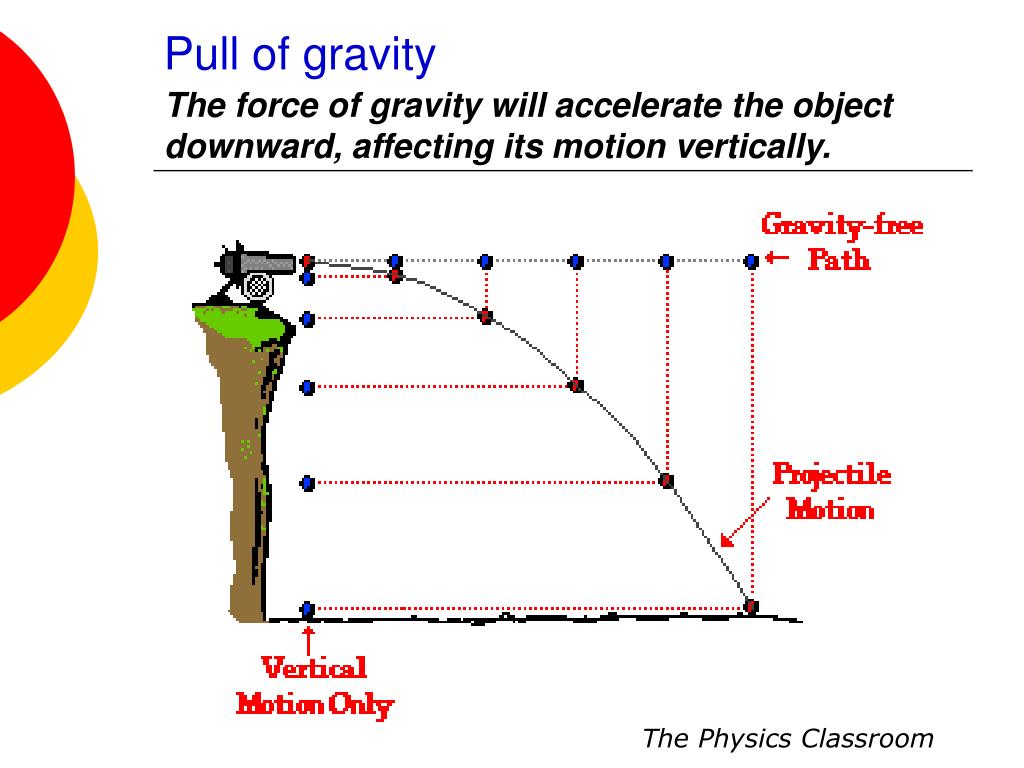
Another interesting avenue involves measuring the gravitational acceleration of objects with extreme precision. We know that gravity causes objects to accelerate towards the Earth. By measuring this acceleration very, very accurately, and by knowing the mass of the Earth, we can also deduce $G$. Think of things like atom interferometry, where scientists use the wave-like properties of atoms to measure tiny changes in gravity with incredible precision. It sounds like science fiction, but it's real and it's helping us refine our understanding of $G$.
Why bother with all this refinement? Because a more accurate value of $G$ has implications for various fields. For instance, in geodesy (the study of the Earth's shape and gravity field), precise measurements of gravity are essential for everything from navigation to understanding tectonic plate movements. And in fundamental physics, any deviation from the predicted gravitational force could hint at new physics beyond our current understanding – perhaps extra dimensions or new fundamental forces.
Gravity's Reach: From Our Pockets to the Cosmos
So, the next time you’re holding your phone, or tossing a ball, or watching that determined squirrel, remember that it’s all governed by this invisible, fundamental force. And that force, though seemingly simple, has a measurable strength, a universal constant that we’ve painstakingly uncovered.
From the grand scale of galaxies colliding to the subtle pull of your coffee mug towards the Earth, gravity is the silent conductor of the cosmic orchestra. And while we might not be able to see it, we can certainly measure it. It’s a testament to human curiosity and our relentless drive to understand the universe, one falling apple, one tiny twist of wire, at a time.
It’s pretty mind-blowing when you think about it. We can quantify the very fabric that holds the universe together, from the smallest apple to the largest star. And all it took was a bit of observation, a lot of clever engineering, and a willingness to measure the immeasurable. So, go on, give gravity a little nod of appreciation. It’s always there, doing its thing, and now you know a little more about how we’ve learned to measure its mighty, yet subtle, pull.